
























People Will Tell You Not to Judge a Book by Its Cover.
Nobody actually operates that way. In the real world, where your potential client is scrolling past twenty businesses before deciding which one to contact, the cover is everything. The cover is your brand. And a bad cover does not just fail to attract the right people. It actively repels them.
The invisible tax on poor branding
Every business with a weak brand identity pays an invisible tax. It shows up in pricing conversations. When your brand does not communicate premium, every client you attract will try to negotiate you down. They question your rates because your brand has already told them they should.
It shows up in the quality of clients. Strong brands attract strong clients. Clients who understand value, who respect process, who come to you because they chose you, not because you were the cheapest option. Weak brands attract price-shoppers. And price-shoppers are the most expensive clients in the long run.
It shows up in referrals. People refer what they are proud to be associated with. A client who loves your work but is slightly embarrassed by your brand presentation will hesitate before recommending you to someone they respect.
It shows up in your own confidence. When you do not fully believe in how your business presents itself, it shows in how you pitch, how you price, how you hold yourself in conversations. Your brand is the external expression of how you see yourself.
The compounding return on a strong brand
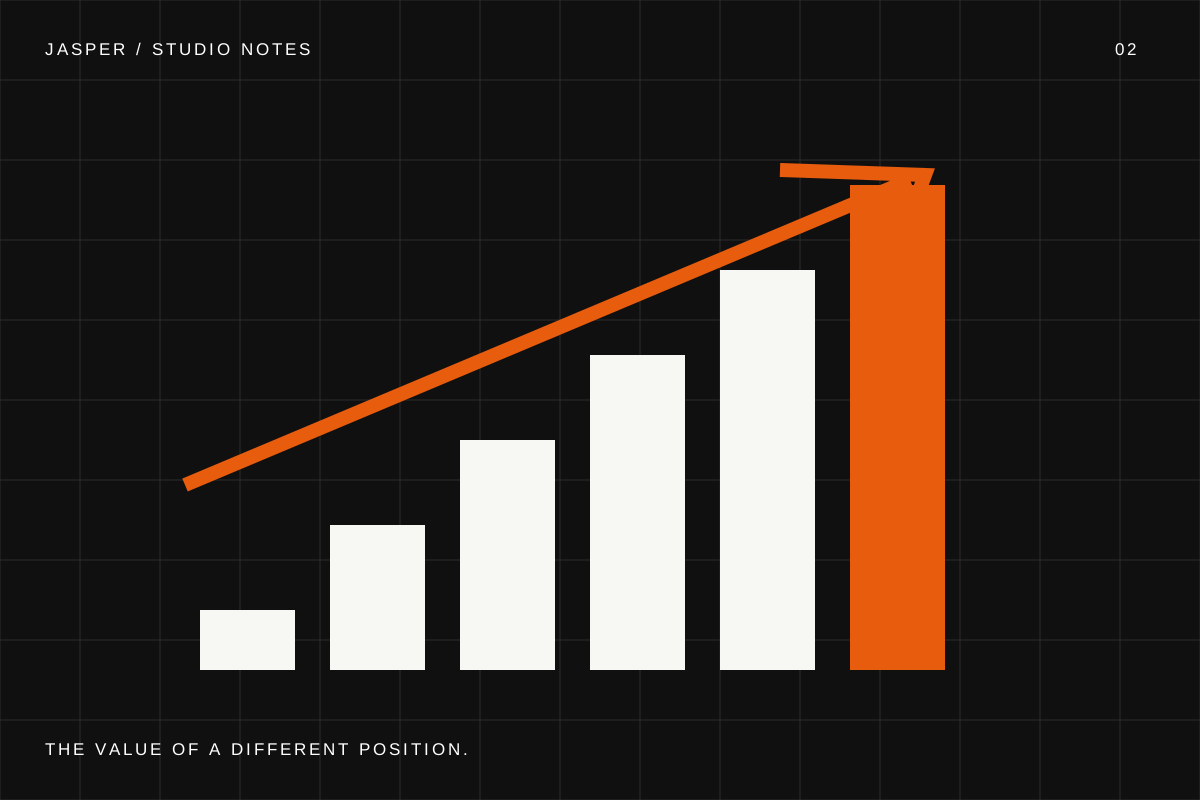
Here is what a well-built brand does over time. It attracts better clients, which means better projects, which means better results, which means stronger case studies, which means even better clients. It allows you to charge more, which means you can do fewer projects, which means you can do each one better, which means your reputation grows faster.
Strong brands compound. Weak brands do not.
At some point, every business faces this decision: continue with the brand we have, or invest in the brand we deserve. The businesses that make that investment at the right moment are the ones that break through. Looking cheap costs more than looking premium. The numbers, eventually, make that undeniable.